
THE EDUCATOR WHO TURNED CURIOSITY
INTO A LIFELONG MISSION
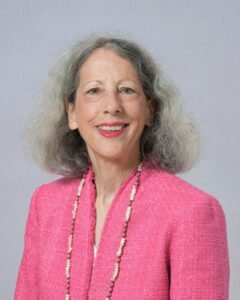
The Curiosity That Started It All
“The most lasting education often begins with a child’s simple desire to find out why.”
Before Joan Ava Gillman became a science teacher, she was a child who could not stop wondering how things worked. Her curiosity was not confined to books or formal lessons. It lived in experiments, observations and the simple pleasure of making something with her own hands. She remembers mixing powders and liquids in her bathroom, convinced that if she kept experimenting she might discover a new product.
Snow became another laboratory. Whenever it fell, she measured snowfall rates, checked temperature and barometric pressure, and photographed the changing landscape. With her older brother, she built robots from shoe boxes and designed model cities from building sets and Lincoln Logs. They even constructed snow tunnels, complete with an escape window—a child’s creative solution to the practical problem of melting snow.
Looking back, those memories feel almost like an early blueprint for her career. The child was learning to observe closely. She was learning that questions could become projects, and that projects could become discoveries. Most importantly, she was learning that understanding the world is more exciting when you participate in it.
That instinct remains visible in her teaching today. Gillman has consistently worked to preserve the natural wonder children bring to science. She does not want students to see science as a distant subject reserved for experts. She wants them to recognize that they are capable of asking meaningful questions, investigating possibilities and using knowledge to make a difference.
Her journey therefore began long before a classroom had her name on its door. It began with curiosity—the kind that makes a child measure snow simply because the snowfall is there to be measured. That curiosity became a professional philosophy: keep asking, keep testing, keep learning, and never assume that wonder has an expiration date.
Gillman’s early experiences also explain why hands-on learning became so important to her. Building, measuring, experimenting and creating gave her a direct relationship with ideas. As an educator, she has carried that lesson forward, designing experiences that invite students to do more than listen. In her classroom, learning is meant to be something students can see, question and experience.
Today, after decades in education, the details of the childhood experiments may seem small. Their influence was not. They helped shape an educator who understands that the most powerful lessons often begin with a question that sounds simple: What happens if I try?
FOUNDATION / THE NOBLE VISIONARY
Learning to Teach by Learning to Include
“Every child deserves an opportunity to shine.”
Gillman’s path into education became clearer during high school, when community service was part of the graduation experience. She chose to volunteer in a lower school, where she taught elementary students to play recorder, tutored small groups in mathematics and organized playground games.
One detail from those early experiences became especially important. The head of the school noticed how Gillman included children in playground activities rather than limiting participation to those who already demonstrated strong athletic abilities. The lesson was subtle but lasting: inclusion is not simply allowing someone to be present. It is actively creating a way for them to participate.
Her service continued beyond the classroom. She taught swimming at a local JCC, including children with special needs, and worked as a substitute ballet teacher at a local dance studio. She found particular satisfaction in helping children become less afraid of the water and more confident in their abilities. At the dance school, she enjoyed seeing young students discover the joy of movement.
These experiences gave her a practical understanding of something that would later become a defining principle of her teaching: every child deserves an opportunity to shine. It is a principle that sounds simple, but it requires a teacher to notice differences, adapt expectations and create multiple pathways to success.
Gillman’s later career in science education would be shaped by the same instinct. She learned that a student who struggles with one method may thrive through another. A child who appears hesitant may become confident when given a hands-on task. A complex concept can become accessible when a student is invited to build, test, demonstrate or explain it.
This is where her story becomes larger than science. Her subject may be science, but the deeper work is confidence-building. She wants students to discover that difficulty does not automatically mean inability.
The young volunteer who organized inclusive games was already practicing the kind of leadership she would later bring to classrooms and school initiatives. She was not looking for the easiest group to teach. She was learning how to make room for everyone.
JOURNEY / THE NOBLE VISIONARY
The First Classroom: A Promise to Stay
“Commitment is not a statement made once. It is a choice made again and again.”
When Gillman began teaching in the South Bronx, she encountered an immediate test of commitment. She was asked, in effect, whether she intended to stay for the entire school year. The question surprised her because she had already made that commitment in her own mind.
The classroom itself was demanding. In one fifth-grade room, reading levels ranged from approximately second grade to tenth grade. Instead of allowing the range to become an excuse, Gillman set out to meet the needs of her students and ultimately worked across six reading levels.
That experience established a pattern that would continue throughout her career: circumstances may change, but the responsibility to the learner remains. She learned early that teaching is not simply about delivering the same lesson to everyone. It is about understanding where students are and determining how to help them move forward.
Over the years, she taught in public schools, private schools and religious institutions. She worked primarily with upper-elementary and middle-school students and taught across academic subjects. Every setting added another layer to her understanding of learners, families, colleagues and school communities.
When she later joined The Browning School, her responsibilities expanded across age groups. She was asked to teach second grade alongside upper-elementary and middle-school science. Rather than treating the change as a limitation, she embraced it and discovered genuine enjoyment in working with younger students.
That willingness to begin again is one of the quiet strengths of her story. A teacher with decades of experience could easily remain inside the boundaries of what feels familiar. Gillman has repeatedly done the opposite. She has accepted unfamiliar age groups, new technologies, new standards and new teaching environments.
The question from the South Bronx—Are you staying?—therefore becomes symbolic. Gillman did not simply stay for one year. She stayed with the profession. She stayed curious. She stayed committed to students. And she stayed willing to change.
That is the kind of persistence that rarely appears in a headline, yet it is precisely what makes a long educational career meaningful.
INNOVATION / THE NOBLE VISIONARY
From Chalkboards to Smart Classrooms
“The tool may change. The purpose of teaching does not.”
Few professional journeys reveal the evolution of education as clearly as Gillman’s. She began teaching in 1982, when a blackboard and chalk were ordinary classroom tools. She remembers the first time a computer appeared in her classroom and, with characteristic honesty, recalls not even knowing where to find the switch.
Today, she works in a very different environment. The Browning School classrooms use SmartBoards, while students have access to Chromebooks for notes, videos, assignments and sharing work. Because Gillman teaches across multiple divisions, she works with different age-appropriate platforms, including Seesaw, Google Classroom and Canvas.
The technology is impressive, but her deeper achievement is adaptability. She did not grow up teaching with digital tools, yet she learned to use them because they could improve the student experience. Images can make an animal study more vivid. Videos can make a scientific process easier to understand. Digital notes can create clearer visual organization for students who benefit from it.
Her attitude toward technology is neither blind enthusiasm nor resistance. It is purposeful adoption. She asks what a tool contributes to learning.
That same balance shapes her view of artificial intelligence. She recognizes that AI will likely become more widespread among teachers and students, but believes educators have a responsibility to ensure that technology enhances learning rather than removes opportunities for students to develop their own skills.
That distinction matters. Innovation is not valuable simply because it is new. It becomes valuable when it helps a learner understand, create, communicate or think more effectively.
Gillman’s career demonstrates that being experienced does not mean becoming fixed. In fact, experience can make adaptation more meaningful because a seasoned educator can compare new tools with decades of classroom reality.
The chalkboard disappeared. The mission did not. The tools evolved, but the goal remained the same: help students become curious, capable and confident.
SUSTAINABILITY / THE NOBLE VISIONARY
Teaching Climate Change Without Teaching Fear
“Give young people knowledge—and then give them a reason to believe their choices matter.”
Among the most difficult challenges in modern science education is explaining climate change to young people without making them feel powerless. Gillman’s response is to replace fear with knowledge, and knowledge with action.
As one of the leaders of The Browning School’s K–8 Green Team, she helps students understand environmental issues while encouraging practical choices. Each week, students select a “Green Action of the Week.” The actions are deliberately accessible: turn off lights when leaving a room, use both sides of paper, recycle correctly, or reduce unnecessary waste.
These actions are small enough for a child to own and meaningful enough to begin building habits. The educational value is larger than the action itself. Students learn that environmental responsibility is not something reserved for governments or scientists. It can begin with everyday decisions.
Green Team students also create signs around the school, speak to homerooms and advisories, and sometimes share environmental information during assemblies. Sustainability becomes visible throughout the school rather than remaining a topic confined to one science lesson.
Gillman has also worked with colleagues as The Browning School implemented the Next Generation Science Standards in middle-school science. She has continued updating curriculum so that it aligns with evolving expectations while preserving opportunities for students to explore science in practical ways.
Her environmental education is therefore both intellectual and civic. Students learn how systems work, but they also learn that understanding creates responsibility.
She wants children to grow into adults who can make wise decisions about the world they inherit. That requires more than knowing vocabulary. It requires confidence, collaboration and a belief that individual choices can contribute to larger change.
Gillman’s approach offers a powerful alternative to helplessness. The planet’s challenges may be enormous, but the first educational response can be surprisingly simple: teach students enough to understand the problem, then give them a meaningful way to participate in the solution.
RESILIENCE / THE NOBLE VISIONARY
When the Classroom Had to Move Home
“When circumstances change, the question is not only what was lost—it is what can still be created.”
The pandemic forced educators everywhere to reconsider what a classroom could be. For Gillman, the challenge was especially relevant to science, a subject that naturally benefits from demonstrations, observation and hands-on investigation.
Instead of allowing online teaching to become passive, she looked for ways to preserve interaction. Before lessons, she contacted students and parents to explain the type of laboratory investigation she would conduct from her kitchen and provided lists of readily available supplies. The preparation allowed students to participate in investigations even though they were physically separated from school.
Parents told her they were amazed by how interactive she was able to make the classes. For Gillman, that response was rewarding because it confirmed a principle she had followed long before the pandemic: engagement is created by design.
Her experience also reveals an important feature of her character. When circumstances changed, she did not spend her energy wishing they were different. She asked what could still be done.
That question has appeared repeatedly in her career. What can a student do when reading levels vary dramatically? What can a teacher do when technology changes? What can a science lesson become when students are learning from home? What can young people do about environmental challenges?
Each question points toward possibility rather than limitation.
Her pandemic teaching also demonstrates that technology works best when it is connected to preparation and human attention. The platform itself was not the lesson. The lesson was the relationship between explanation, demonstration, participation and curiosity.
Resilience in education is rarely dramatic. Often it is simply the willingness to prepare one more activity, send one more message, find one more workaround and enter the next class ready to try again.
Gillman did exactly that. The physical classroom changed. Her commitment to making science engaging did not.
IMPACT / THE NOBLE VISIONARY
When a Lesson Becomes Community Action
“A classroom can teach a concept. A student can turn that concept into a cause.”
The strongest evidence of educational impact is often found outside the classroom.
Gillman remembers a sixth-grade lesson about water shortages and unequal access to clean water. One student was deeply moved by the discussion. The experience eventually inspired that student to join the school’s Green Team, where students researched organizations working on clean-water access.
The group chose to work through Water.org and organized a school fundraiser. Students collected money, created posters and shared information about the issue. They raised more than $1,000.
The significance of the result is not only financial. A classroom conversation became a student decision. The decision became a project. The project became community action.
Another example emerged when Green Team students learned about families who had lost their homes in Hurricane Melissa. They wanted to help. Students collected donations during the school week and held a bake sale, ultimately raising $2,300.32 for Project HOPE and American Friends of Jamaica.
These moments show Gillman’s model of leadership in practice. She does not simply tell students that problems exist. She creates opportunities for them to respond.
Environmental projects also include community-based activities such as cleanups in Central Park and conservation efforts. Through such experiences, students learn environmental awareness while developing collaboration and leadership skills.
Some students have been inspired to consider future roles as environmental advocates. That is the long arc of education: a teacher introduces an idea, a student takes ownership, and the idea continues moving long after the original lesson has ended.
Gillman’s impact therefore cannot be reduced to grades or test scores. It can be seen in students who become more willing to participate, more confident in taking initiative and more aware of their ability to contribute.
Education becomes powerful when knowledge stops being something a student carries for an exam and becomes something they carry into the world.
GROWTH / THE NOBLE VISIONARY
The Educator Who Never Stopped Learning
“Experience is valuable. Staying teachable is what keeps experience alive.”
One of the strongest threads running through Gillman’s career is her refusal to treat experience as an excuse to stop learning.
While completing a Master’s Degree in Education, she served as a student teacher at P.S. 47 Junior High School for the Deaf, working with profoundly deaf science students in grades seven, eight and nine. Her cooperating teacher emphasized hands-on learning, including an electronics unit in which students used their knowledge to build a miniature amusement park with working rides and attractions.
That experience strengthened Gillman’s belief that students remember ideas more deeply when they can interact with them. The principle became part of her own teaching practice.
A second influence came from a high-school physics teacher who encouraged her to write science articles and present workshops at professional conferences. She began presenting workshops in 2011. At first, she wondered how fellow educators would respond. Their encouragement convinced her to continue.
Since then, she has shared ideas through professional science organizations and conferences, including the National Science Teaching Association, the Science Teachers Association of New York State, the Science Council of New York City and STEMTeachersNYC.
Her professional contribution extends into conversations about diversity and inclusion as well. She has presented a workshop at the NYSAIS (New York State Association of Independent Schools) Diversity Symposium, sharing her experience and perspective with fellow educators in a setting focused on building stronger, more inclusive school communities.
Her commitment to curriculum development has also taken a practical, forward-looking form. In summer 2026, she received a curriculum grant to revamp the Kindergarten and Fourth Grade science curricula so they would be aligned with the Next Generation Science Standards (NGSS). She invested more than 35 hours in the two curriculum projects, carefully reworking the learning experiences to strengthen alignment while keeping science accessible and engaging for young learners.
This work expands her influence from student learning to teacher learning. A classroom may reach dozens of students at a time. A professional workshop can allow one idea to travel to many classrooms through the educators who carry it forward.
Gillman also credits continuing professional development with helping her sustain enthusiasm over a long career. Workshops, courses and conferences have exposed her to new methods, new perspectives and colleagues with different strategies.
That openness is more than professional maintenance. It is an attitude toward life. She remains willing to be a learner even after decades of being the person at the front of the room.
Perhaps that is why her career has continued to evolve. Curiosity did not end when she became a teacher. It simply changed direction.
LEADERSHIP / THE NOBLE VISIONARY
Leadership That Begins With Listening
“Leadership is not having every answer. It is listening well enough to find better ones.”
Gillman’s leadership philosophy is grounded in qualities that are easy to name but difficult to practice consistently: dedication, discipline, organization and creativity.
She describes herself as someone who gives full effort to her work and uses organization to stay focused. Creativity allows her to design lessons that give students different ways to demonstrate understanding. Younger students may build structures in engineering assignments, while older students can create public-service announcements about weather safety.
Yet her most important leadership principle may be listening.
Gillman believes a good leader must listen to peers, hear their strategies and remain willing to combine ideas. If a leader assumes they already know the best approach, collaboration becomes smaller. If they listen, a team can become smarter than any one individual.
That approach is particularly relevant in education, where no single method works perfectly for every learner. Teachers need to share observations, compare strategies and adjust together.
Her philosophy also values compromise. Shared goals sometimes require people to blend their preferred approaches rather than insisting that one person has the only correct answer.
This is leadership without unnecessary drama. It is practical, collaborative and centered on outcomes.
Her belief in listening also extends to students. A teacher cannot understand a learner’s needs without paying attention to what the learner is communicating—through questions, mistakes, confidence, silence and persistence.
Gillman’s leadership therefore does not depend on being the loudest voice in the room. It depends on making room for useful voices to be heard.
In a profession built around helping other people grow, that is an appropriate philosophy. The leader’s success is not measured by how many people depend on the leader forever. It is measured by how many people become more capable because the leader created the conditions for them to contribute.
RECOGNITION / THE NOBLE VISIONARY
Recognition, Humility and the Measure of Success
“Awards can recognize a career. Students are the ones who give that career meaning.”
Gillman’s career has received substantial professional recognition. The International Association of Top Professionals selected her as “Top Educator of the Decade” and named her among the “50 Top Fearless Leaders.” She was also selected as “Top Educator of the Year 2025” and recognized among the “Top 25 Global Impact Leaders.”
She was selected for the Forttuna Education Council | Global Advisory Board 2026 and received an honorary doctorate from CICA International University. Earlier, in 2017, the Calhoun School honored her with the Urhy Thompson Teacher of the Year Award.
Her work has also been featured through articles in National Digest and podcast conversations about innovative teaching techniques. Professional workshops have provided another avenue for recognition and contribution.
These honors matter because they acknowledge a career that has consistently combined classroom practice with professional engagement. They also create opportunities for Gillman to connect with educators and leaders beyond her immediate school community.
Yet her own definition of achievement remains strikingly personal. She has said that awards are wonderful, but that nothing compares with helping students become lifelong learners and seeing a student realize they can succeed.
That perspective changes the meaning of recognition. A title may describe what the professional world sees. A student’s confidence describes what the classroom experiences.
Her upcoming recognition also marks an important milestone: in December 2026, she will receive the “Woman of the Year 2026” award from the International Association of Top Professionals (IAOTP). Rather than serving as a finish line, this honor represents another meaningful point along an ongoing path of contribution and service.
Gillman’s humility is important here. She describes major distinctions as humbling because she understands that education is a collective profession. Students, families, colleagues and mentors all shape a teacher’s work.
Recognition can open doors, but purpose determines what happens after the door opens.
For Gillman, the purpose remains clear: use experience to encourage students, support educators and keep the love of learning alive.
CREATIVITY / THE NOBLE VISIONARY
The Musician Behind the Scientist
“Creativity is not separate from excellence. It is one of the ways excellence stays human.”
Joan Ava Gillman’s story cannot be fully understood through education alone. She is also a classically trained pianist and violinist, and music provides another window into the person behind the professional title.
Approximately four times a year, she gives classical piano and violin concerts for residents of a nursing facility. She also plays violin with orchestras including the Bergen Philharmonic Orchestra, the North Jersey Symphony Orchestra and The August Symphony Orchestra.
Music gives her an outlet for creativity, but it also strengthens her empathy as an educator. When a musical passage requires repeated practice, she is reminded of what students experience when they encounter a difficult scientific topic.
That connection is more profound than it first appears. Experts often forget what it feels like not to know something. Practice reminds the learner that mastery is built gradually. A student who struggles today may simply be a student who needs another explanation, another attempt or more time.
Gillman’s musical life keeps that reality close to her.
Orchestral performance also mirrors her philosophy of collaboration. An orchestra is not a collection of soloists competing for attention. Each musician must listen, respond and contribute to a shared result.
The same principles appear in her educational leadership: listen carefully, understand the larger goal and contribute your strengths.
Balancing teaching and music is not always easy. Longer practice sessions may have to wait for weekends when she has more time to concentrate. Yet she continues to make room for music.
That choice reveals something important about lifelong creativity. A profession can be demanding without becoming the entirety of a person’s identity.
For Gillman, science and music are not opposites. They are two ways of exploring the world: one through evidence and investigation, the other through expression, discipline and shared performance.
Together, they reveal an educator whose curiosity has never been confined to a single subject.
VISION / THE NOBLE VISIONARY
A Future Built on Curiosity and Responsibility
“The future belongs not only to those who understand change, but to those who can learn through it.”
The next stage of Gillman’s career brings a change in focus rather than a change in purpose. She plans to devote her time to lower-school science, including kindergarten students, while continuing as leader of the K–8 Green Team.
She also plans to remain active as a Subject Area Representative for the Science Teachers Association of New York State, present workshops at professional conferences around the country and participate as a member of the Forttuna Education Council | Global Advisory Board.
These plans reflect a career that has never depended on standing still.
The students may be younger. The technology may be newer. The scientific challenges may be larger. But the central questions remain remarkably familiar: How can students become curious? How can they become capable? How can they understand enough to make responsible decisions?
Gillman’s approach to artificial intelligence reflects that future-facing mindset. She recognizes its growing role while emphasizing caution and the importance of protecting students’ own skill development.
Her environmental work offers a second pillar for the future. Students need to understand global challenges, but they also need to believe that action is possible. Small green actions, community projects and student-led fundraising become practical training in responsibility.
That is what future-ready education looks like through Gillman’s lens. It is not simply preparation for a world of advanced tools. It is preparation for a world that will require judgment.
Students will need to know how to use technology without becoming dependent on it. They will need to understand science without losing their sense of wonder. They will need to confront environmental challenges without surrendering to fear.
Gillman’s career has prepared her for precisely this kind of uncertainty because she has spent decades learning how to adapt.
The future, for her, is not something to predict perfectly. It is something to help the next generation meet with knowledge, courage and curiosity.
LEGACY / THE NOBLE VISIONARY
The Humanity That Becomes a Legacy
“The deepest legacy is not what a teacher leaves behind, but what students carry forward.”
At the heart of Gillman’s professional story is a belief in humanity. She speaks about searching for the humanity in the people she meets and describes herself as a positive person who enjoys the company of others.
That philosophy can be seen throughout her career. It appears in the way she included children in playground activities, taught swimming to children with special needs, adapted lessons for different learners and created interactive science experiences during difficult circumstances.
It also appears in her belief that people should not be judged without understanding what they have experienced. Her admiration for the message of “Judge Softly” reflects a commitment to empathy: before forming conclusions about another person, try to understand the path that brought them there.
For a teacher, this is not merely a personal philosophy. It is a professional necessity.
Students arrive with different experiences, different levels of confidence and different ways of responding to difficulty. A behavior that looks like disengagement may reflect uncertainty. A mistake may be part of a student’s learning process. A quiet student may need a different invitation to participate.
Listening allows a teacher to see beyond the surface.
Gillman’s greatest satisfaction comes from watching a student develop a skill they once believed was beyond their reach. That moment is powerful because it is not only academic. It changes the student’s relationship with themselves.
They begin to think: perhaps I can do this.
That sentence is one of the quiet foundations of education. It can lead to another attempt, another question and eventually another achievement.
After decades in the profession, Gillman still measures meaning through those moments. Her work suggests that the most durable legacy of a teacher may not be the information students remember, but the confidence they carry forward.
A career can be counted in years, positions, awards and publications. Gillman’s career can also be counted in something less visible: the people who continue forward with greater curiosity and confidence because a teacher helped them get there.
Her influence has extended across generations of students and through multiple educational settings. It has also moved outward through professional workshops, environmental projects, curriculum work and collaboration with fellow educators.
The examples are concrete. A student becomes motivated by a lesson on clean-water access and joins the Green Team. Students organize fundraising because they believe a community problem deserves a response. Young people participate in environmental projects and discover leadership through action. Educators attend workshops and carry new approaches back to their own classrooms.
This is the multiplication effect of education.
A teacher teaches one group, but the influence of that teaching can travel far beyond the original room. Students grow into adults. Adults make decisions. Decisions shape communities.
Gillman’s own career has benefited from mentors who encouraged her to experiment with hands-on learning and later to share her ideas publicly. She has responded by becoming an encourager herself.
Her advice to future professionals is equally grounded: continue learning, maintain a sense of humor, do not be afraid to ask for help and keep your spirits up.
She acknowledges that teaching can be challenging and exhausting. Yet she remains convinced that few professions can match its opportunity to prepare the next generation to contribute positively to the world.
That belief is perhaps the clearest summary of her legacy.
She does not see education as an endpoint. She sees it as preparation for what comes next.
CONCLUSION / THE NOBLE VISIONARY
The Noble Visionary: A Life Still in Motion
“A noble visionary does not simply imagine a better future—they help others become capable of creating it.”
There are professionals who build careers, and there are professionals who build capacity in other people. Joan Ava Gillman belongs to the second group.
Her story began with a child’s curiosity about snow, weather, chemistry, building and invention. It grew through early community service, inclusive teaching experiences and a first classroom in the South Bronx where commitment was tested immediately.
Over the decades, the world around her changed. Chalkboards gave way to computers. Computers gave way to interactive boards and digital platforms. Classrooms moved online during a global pandemic. Artificial intelligence emerged as a new educational question. Science standards evolved. Environmental challenges became more urgent.
Gillman changed with the world without losing herself in the change.
Her constant has been the student.
She has used hands-on learning to make science memorable, technology to broaden access, environmental initiatives to turn awareness into action and professional development to keep her own practice evolving.
Her honors recognize the scale of her contribution, but they do not replace the personal measure she returns to again and again: the moment when a student discovers they can do something they once believed was beyond their reach.
That is why her story is larger than a teaching résumé.
It is a story about persistence without rigidity, innovation without losing humanity, leadership without losing humility, and achievement without losing purpose.
Her music adds another dimension to the picture. Her environmental work adds another. Her professional workshops add another. Yet every part of the story points toward the same underlying belief: people become stronger when they are given knowledge, encouragement and room to grow.
Gillman’s future remains active. There are younger students to teach, environmental initiatives to guide, curriculum initiatives to advance, educators to encourage, workshops to present and new technologies to understand.
After 45 years in education, she is still learning.
Perhaps that is the most fitting ending—and the most fitting beginning.
A noble visionary is not someone who simply imagines a better future. It is someone who spends a lifetime preparing other people to create it.
Joan Ava Gillman’s legacy is still being written, one student, one lesson, one question and one act of curiosity at a time.